Senior Students Investigate Microbial Life in Lake Susan Waters
 Daniel Rodriguez
 Senior Students Survey Lake Susan
October 30, 2026
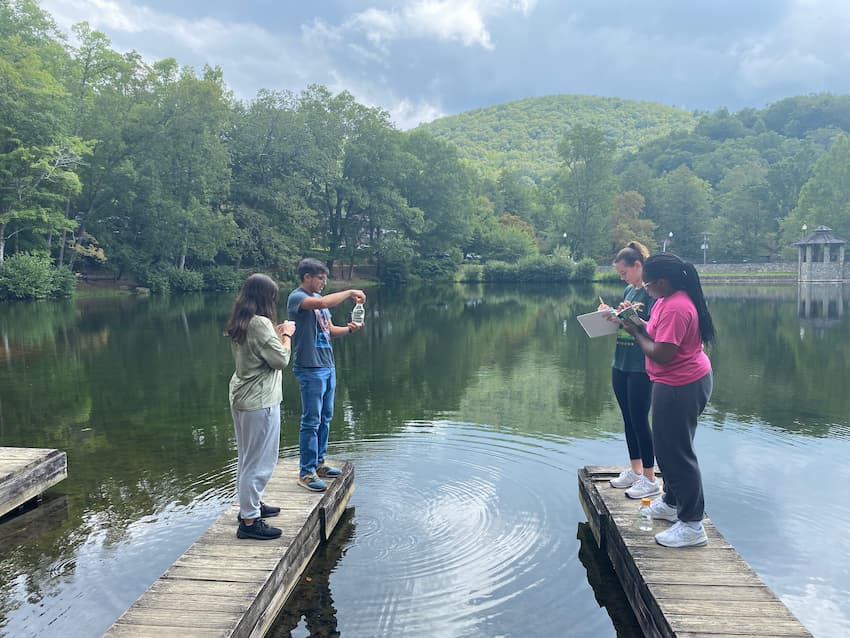
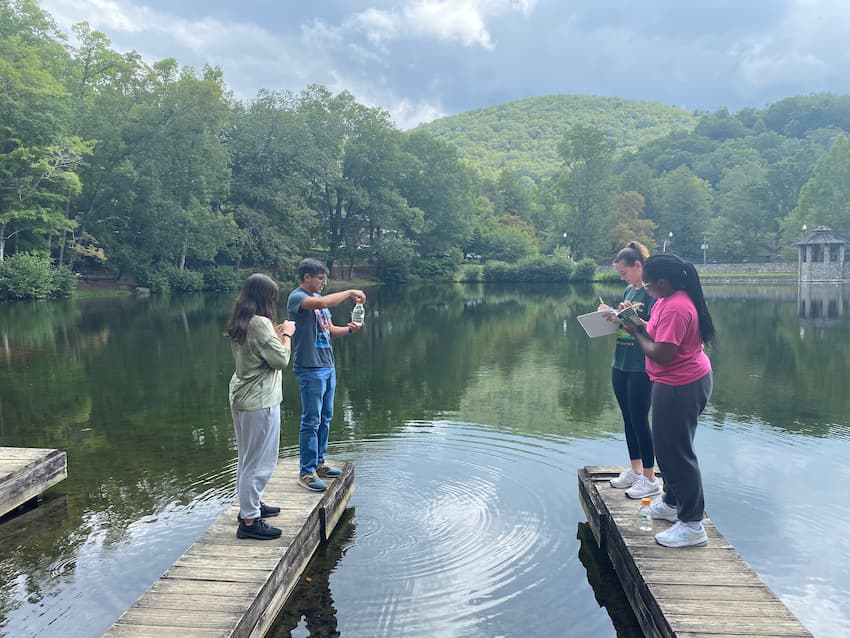
Four senior students in Dr. Maddison Melchionna's microbial genetics lab have embarked on an exciting journey to uncover the hidden microbial life within Lake Susan's pristine waters.
Hannah Jarboe (Mechanicsville, MD), Tamiya Bruce (Charleston, SC), Jaycee Beckham (Mount Pleasant, SC), and Caleb Potter (Mill Spring, NC) form the core team dedicated to this scientific exploration. Their objective involves isolating and cultivating bacteria from various Lake Susan water samples under carefully monitored laboratory conditions.
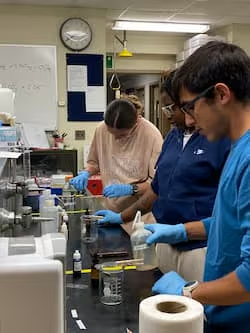
Utilizing the comprehensive Bergey’s Manual of Systematic Bacteriology, a definitive guide to microbiology, the team meticulously documents each bacterial specimen's characteristics—from motility patterns to colony morphology. Their initial findings revealed several distinct bacterial colonies, with the first identified specimen named Serratia marcescens, notorious for its pungent odor reminiscent of decaying marine life.
"This strain exhibits striking red pigmentation alongside its characteristic fish-like aroma," noted Hannah. "Its appearance also resembles cosmetic products, though far less appealing."
Jaycee elaborated on the bacterium's ecological context: "While typically absent from standard lab environments, Serratia marcescens thrives naturally in surface waters. Though not inherently pathogenic, it poses risks when introduced to vulnerable hosts."
Following identification, the researchers will assess potential antibiotic resistance—a critical global health challenge where bacterial adaptation renders treatments ineffective. This phenomenon occurs through genetic mutations that enable survival against antimicrobial agents.
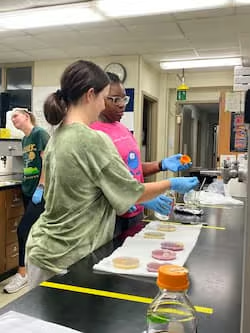
"Antibiotic resistance emerges when bacteria evolve mechanisms to evade therapeutic interventions," explained Hannah. "Such adaptations threaten modern medicine's efficacy against common infections."
Dr. Melchionna praised the students' interdisciplinary collaboration, highlighting their shared curiosity and academic dedication. The project extends beyond Lake Susan, potentially expanding to Lake Tomahawk research initiatives. Currently, the team values both methodological skill development and the profound appreciation for natural systems—whether observed in laboratories or wild environments.
"Our discoveries bridge theoretical knowledge with practical application," stated Hannah, who intends to pursue graduate studies. "Understanding creation's intricacies inspires both scientific inquiry and spiritual reflection."
"As practitioners of service-oriented science, we aim to leverage laboratory insights for community benefit," added Jaycee. "Identifying microbial threats could directly improve public health outcomes."